Probiotics 101
Prebiotic, probiotic, postbiotic, synbiotic: what each word on a PB8 bottle means
Four words share most of a probiotic shelf, and the 3-in-1 PB8 bottles use three of them at once. Each one has a definition that scientists agree on. Here they are, with where each part sits on our six labels, so that the words on the front of a bottle point you to a line on the back.
Probiotic
The definition used by scientists comes from the International Scientific Association for Probiotics and Prebiotics: probiotics are live microorganisms that, when administered in adequate amounts, confer a health benefit. Three parts of that sentence matter when you read a label. The organisms are alive. There is an amount, and it has to be adequate. And the benefit belongs to what was studied, which the same association spells out: different strains have different effects, as shown in scientific studies.
Probiotics are live microorganisms that, when administered in adequate amounts, confer a health benefit.International Scientific Association for Probiotics and Prebiotics
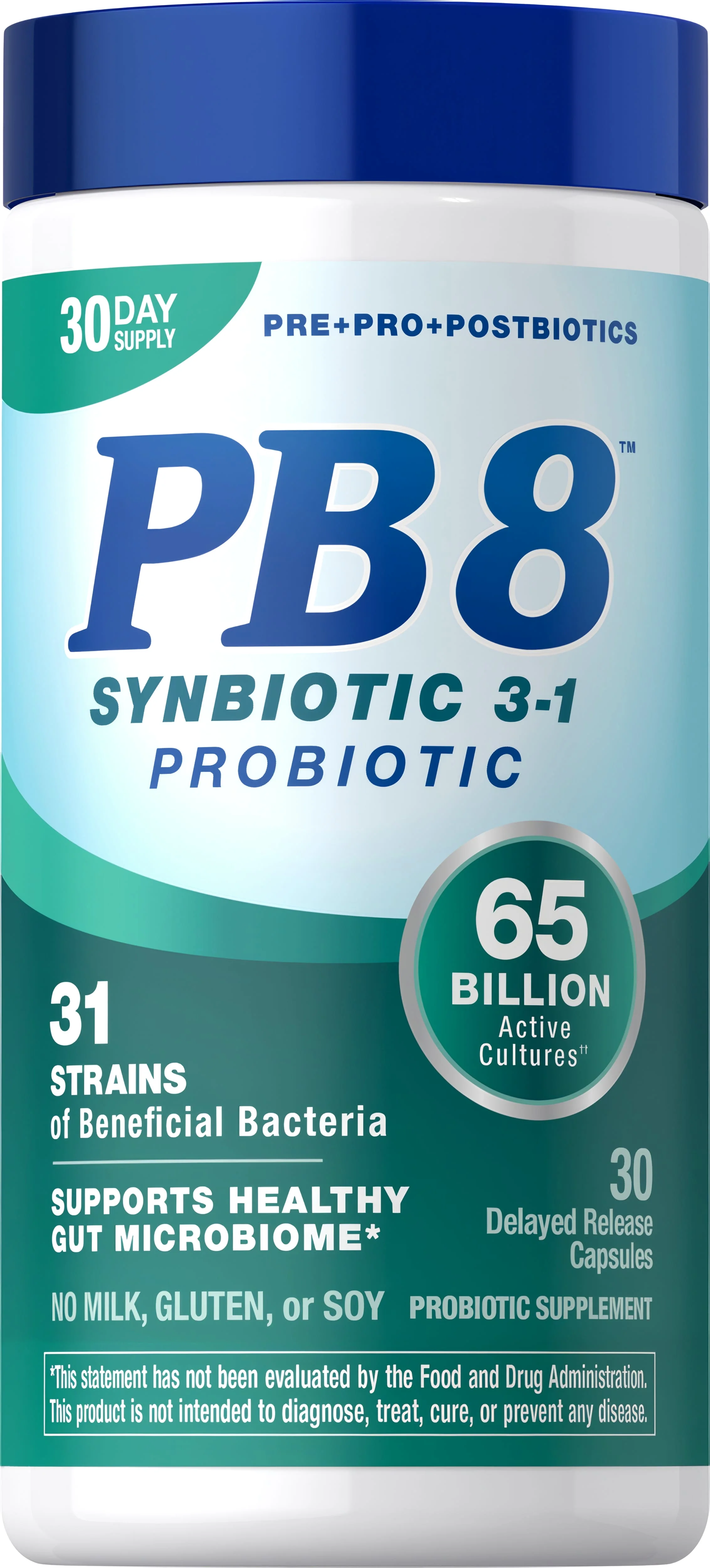
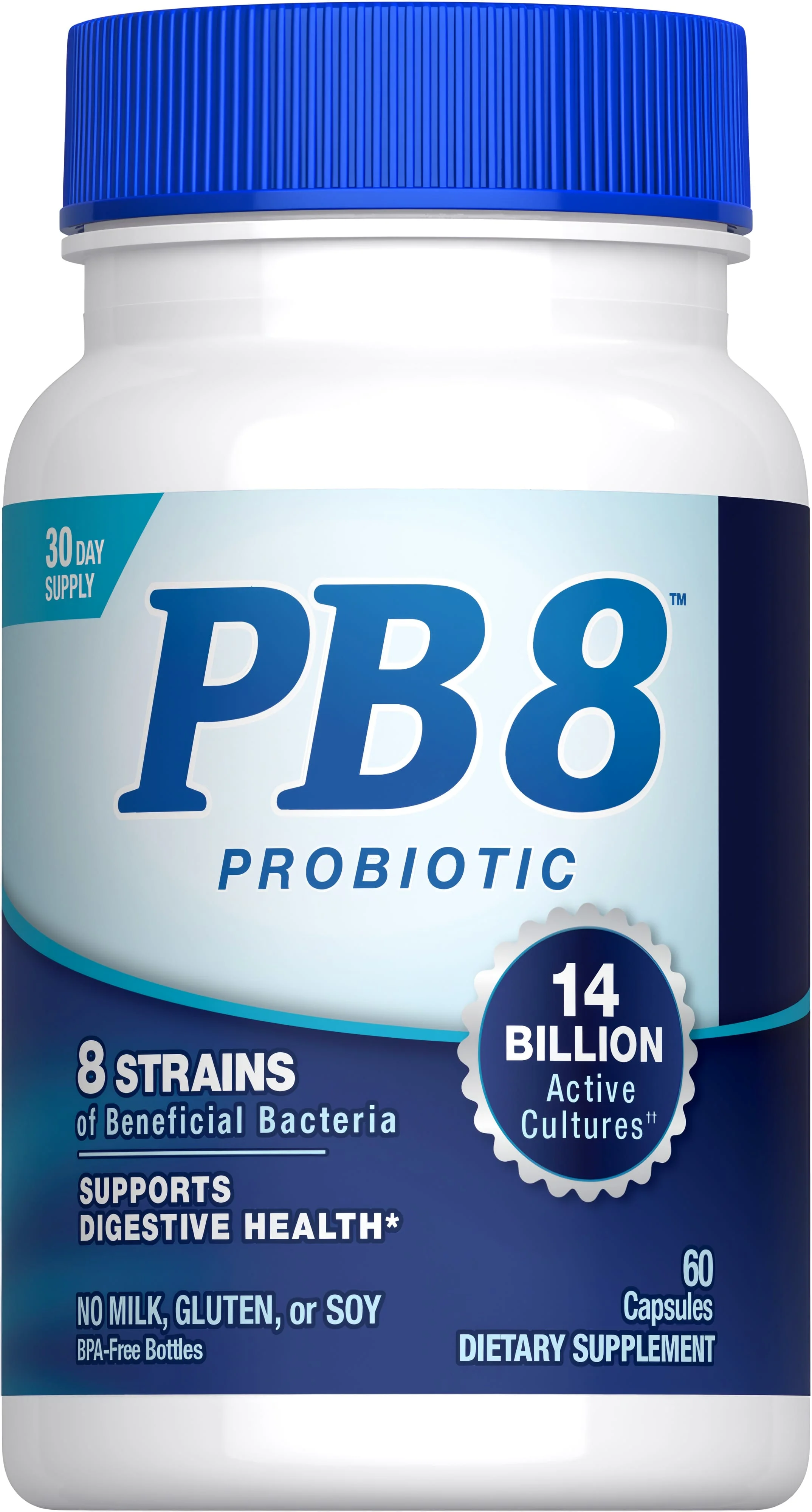
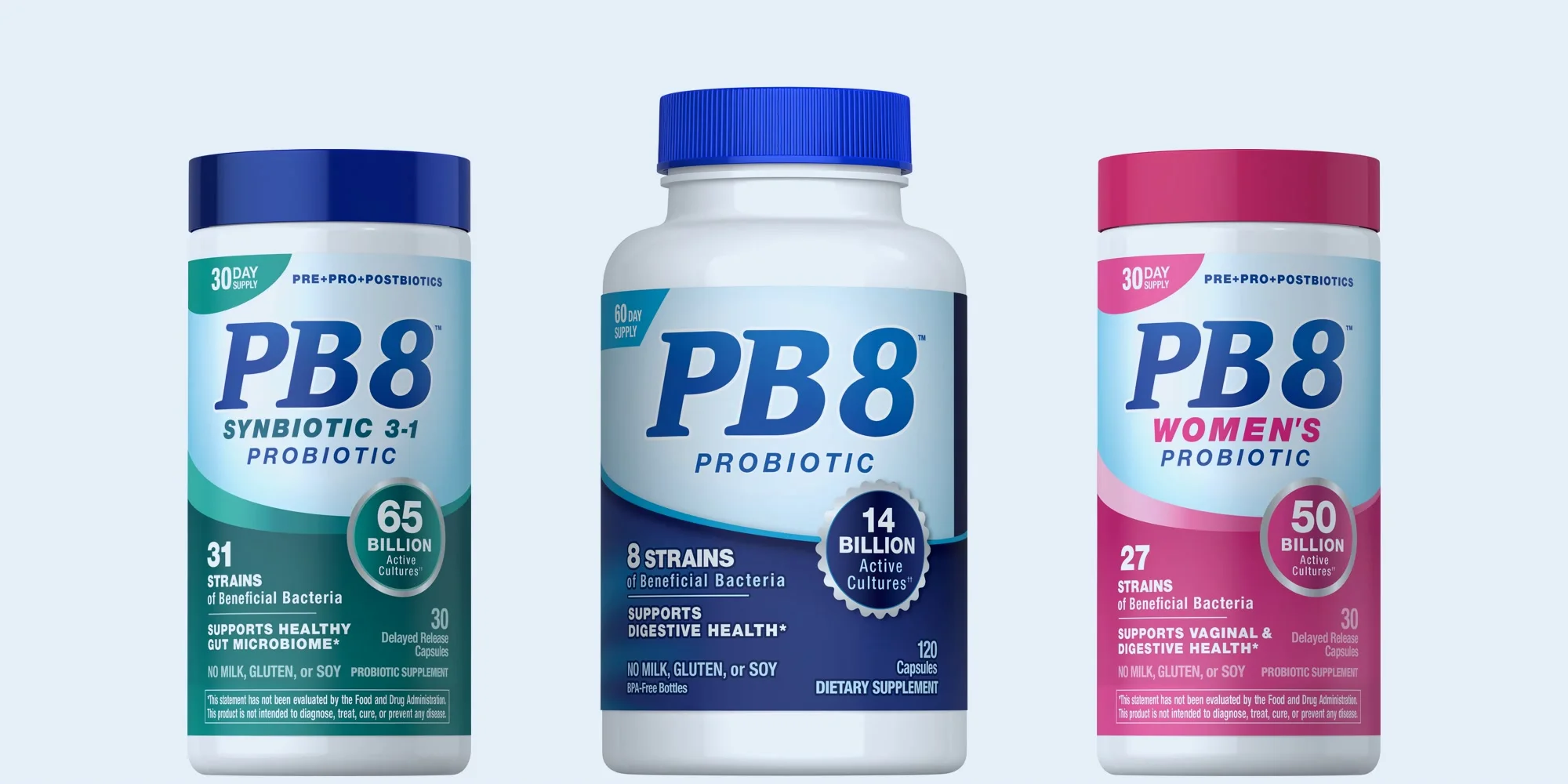
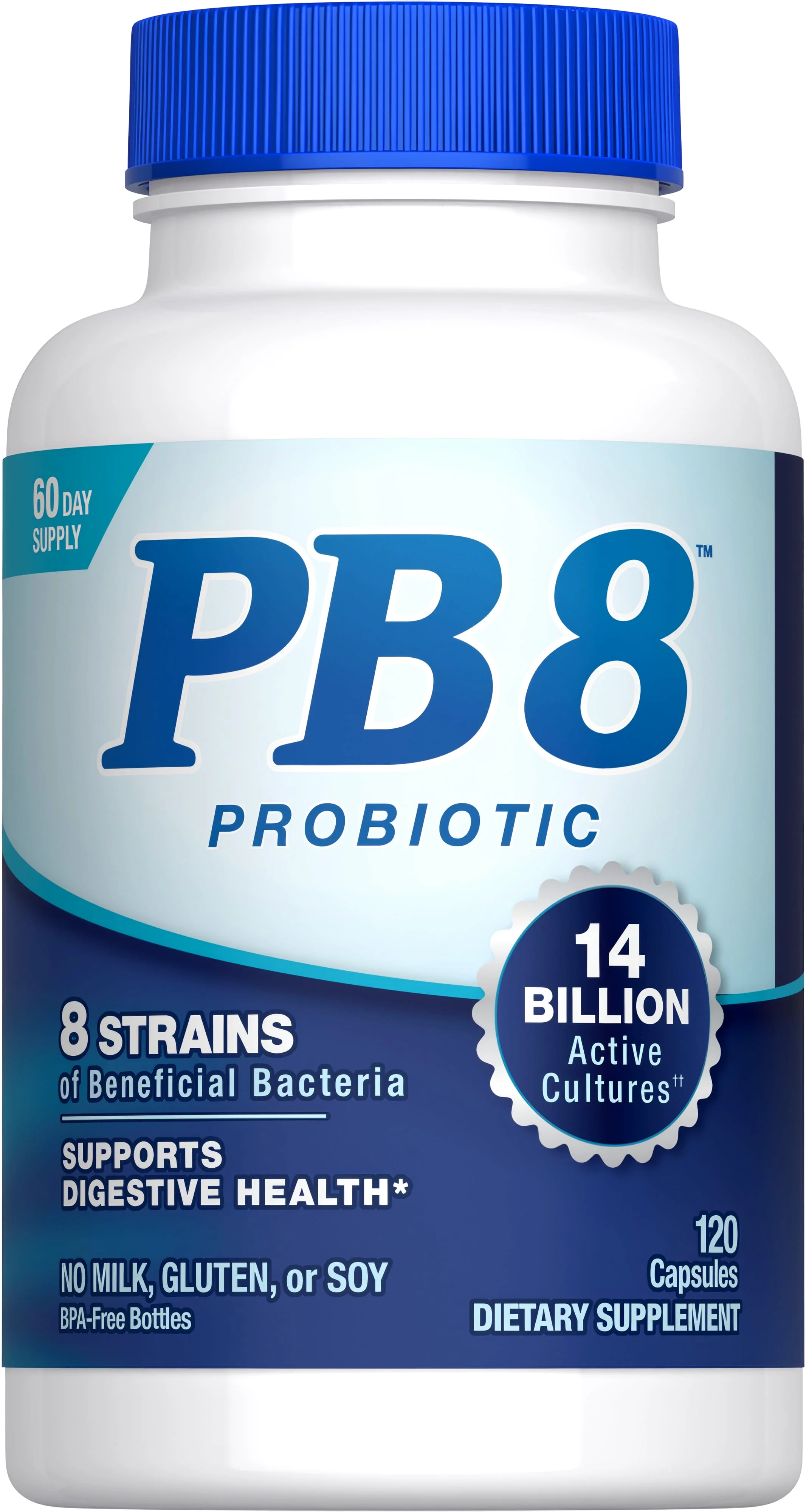
On a PB8 label the probiotic part is the strain list and its CFU count. The Original has eight strains and 14 billion CFU per two-capsule serving. The Synbiotic 3-1 has 31 strains and 65 billion CFU in one capsule. The National Center for Complementary and Integrative Health notes that the most common probiotics belong to two groups, Lactobacillus and Bifidobacterium, and those are the two names that fill almost every line of our strain lists.
Prebiotic
A prebiotic is not a microorganism at all. In the ISAPP definition, prebiotics are substrates that microorganisms living in the host use selectively, and that confer a health benefit. In plainer words: food that particular microbes living in you can use. The National Center for Complementary and Integrative Health describes them the same way, as nondigestible food components that selectively stimulate the growth or activity of desirable microorganisms.
Every PB8 formula carries one. The classic formulas list theirs among the other ingredients: inulin from chicory root in the Original and the Vegetarian, organic acacia and oat hull fiber in Immune Support. The 3-in-1 formulas give the fiber a line of its own in the Supplement Facts table, with its weight, so you can see how much of it there is.
| Formula | Prebiotic | Amount on the label |
|---|---|---|
| PB8 Original and Vegetarian | Inulin from chicory root | In other ingredients |
| PB8 Immune Support | Organic acacia, organic oat hull fiber | In other ingredients |
| PB8 Synbiotic 3-1 | Organic Acacia Fiber, Organic Oat Hull Fiber, Organic Rice Fiber, Organic Rice Extract Blend | 100 mg |
| PB8 Women's | Organic Acacia Fiber, Organic Oat Hull Fiber | 285 mg |
| PB8 Vaginal | Organic Beet Root, Organic Acacia Fiber, Organic Cranberry, Organic Xylooligosaccharides (XOS) | 600 mg |
Postbiotic
Postbiotic is the newest of the four words. The ISAPP definition reads: a preparation of inanimate microorganisms and/or their components that confers a health benefit on the host. In other words, whole or partial microbes that are no longer alive. The association adds that to make one, the living cells must be deliberately killed or inactivated, and parts of the cells must remain in the preparation.
That makes a postbiotic easy to confuse with a dead probiotic, and the definition is careful about the difference. A postbiotic is made on purpose, with the inactivated cells or their parts kept in, and, like the other three words, it is defined by the health benefit it confers on the host.
Inanimate is the key word. A postbiotic is not alive, and that is the difference from a probiotic, so a count of live cells does not describe it. Our three 3-in-1 labels say it in their own words: "Provides postbiotic benefits from inanimate organisms." On those labels the culture line counts probiotics and postbiotics together, as "Total Probiotic & Postbiotic Cultures", so the line reads 65 billion on the Synbiotic 3-1, 50 billion on the Women's and 6 billion on the Vaginal formula.

Synbiotic
A synbiotic puts the first two together. The National Center for Complementary and Integrative Health defines synbiotics simply as products that combine probiotics and prebiotics. Put the two definitions above side by side and that is what it means on a label: live cultures and the fiber they can use, in one capsule.
That is where the name of the PB8 Synbiotic 3-1 comes from: 31 strains and 65 billion CFU of cultures with 100 mg of prebiotic fiber in one delayed release capsule, and postbiotics as the third part of the "3-1". The Women's and Vaginal formulas are built the same way, each with its own strains and its own fiber blend, and both are labeled for women 18 and over.
Strictly, every PB8 formula pairs cultures with a prebiotic, because even the Original carries inulin. The difference on the 3-in-1 labels is that the fiber is weighed and printed in the facts table, and that postbiotics are named. You can see all six side by side on the comparison page.
Where each word sits on a PB8 bottle
The front of a bottle uses the words, and the back shows you the lines behind them. Once you know where to look, you can check any of the four words against the panel in a few seconds, on our bottles or on any other.
| Word | Where to look on the label |
|---|---|
| Probiotic | The strain list and the CFU count in the blend line |
| Prebiotic | Other ingredients on the classic formulas, a fiber blend line with its weight on the 3-in-1 formulas |
| Postbiotic | The line Total Probiotic & Postbiotic Cultures and its footnote, on the 3-in-1 formulas |
| Synbiotic | Cultures and a prebiotic on the same label, and the name of the Synbiotic 3-1 |
Two habits help. First, look for the strain codes, not just the species, because a species name alone does not tell you which strain is in the capsule. Second, look for the day the count refers to. Our labels say at the time of manufacture, and that wording sits in the footnote under the table, next to the double dagger after the number.
The fiber is the easiest of the four to check. On the classic formulas you will find it named without a weight, and on the 3-in-1 formulas you will find the weight printed in milligrams, which lets you compare one blend with another: 100 mg in the Synbiotic 3-1, 285 mg in the Women's and 600 mg in the Vaginal formula.
What the words do not tell you
None of the four words says what a product does for you. A benefit belongs to a particular strain or preparation, studied in particular people. The National Center for Complementary and Integrative Health gives the example plainly: if a specific kind of Lactobacillus helps, that does not necessarily mean that another kind of Lactobacillus, or any Bifidobacterium, would do the same thing.
What a label can tell you is what is in the capsule. Read the strain list and its codes, the count and the day it was counted, the fiber and its weight. Our strain map shows which strain sits on which of our labels, and how to read a probiotic label walks through each line. Then ask the question that matters to you with the label in your hand, to a pharmacist or your doctor.
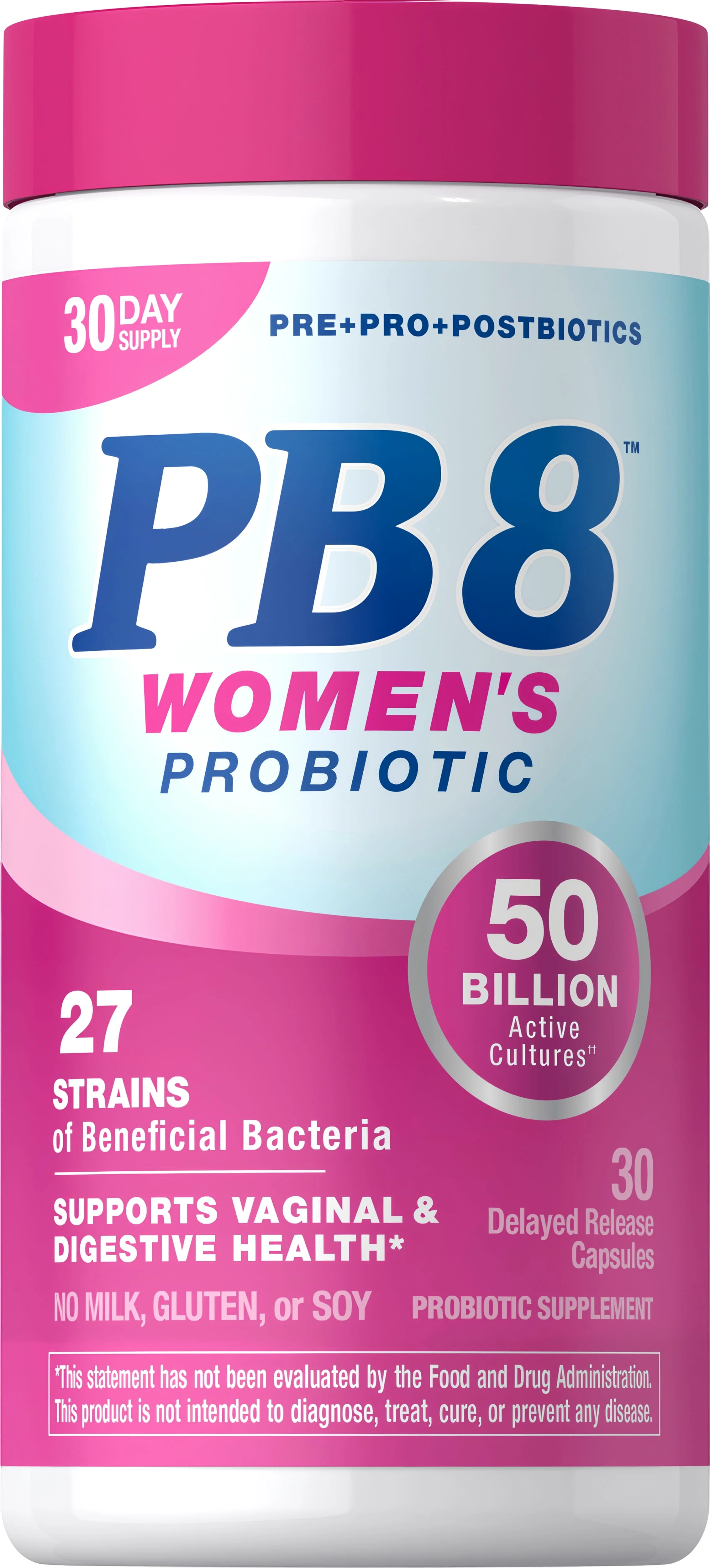
50 billion CFU, 27 strains incl. RC-14 and GR-1. 1 Delayed Release capsule a day.